Furniture helps visitors read the Centro Cultural São Paulo, but it does not tell the whole story. Tables indicate places to stay; shelves suggest consultation; turntables point to a listening experience. A photograph, however, cannot prove that every collection is directly reachable or that every service is available without registration or an appointment. Choosing well requires combining this reading of the space with the official rules.
In practice, the CCSP brings together a multidisciplinary library, an art collection, comics, a children’s area, resources for visually impaired people and a music collection. This guide focuses on those points of use—not on the ramps or garden—and explains where to study, talk, read with children or listen to records.
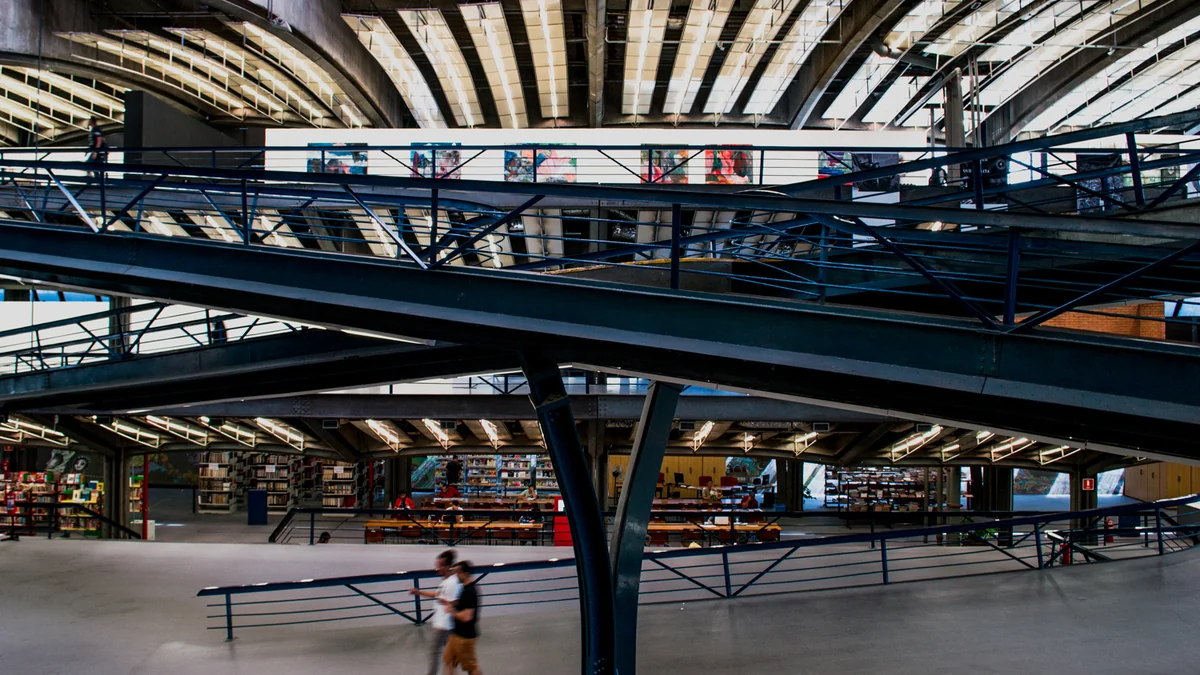
A table is the first sign, not a reservation
Library tables are available for use, according to the CCSP’s official Visit page. Visitors can therefore arrive to read or study, but the published information does not say that seats can be reserved. An available table must also be distinguished from unrestricted access to every collection: some departments require an appointment.
The CCSP defines itself as a public place for culture, study, meeting and spending time. This combination explains why absolute silence should not be expected throughout the building. Official guidance asks visitors to moderate conversations and sound in study, reading and performance areas. In libraries and collections, only water in a transparent bottle is allowed; food and other drinks must remain in designated areas.
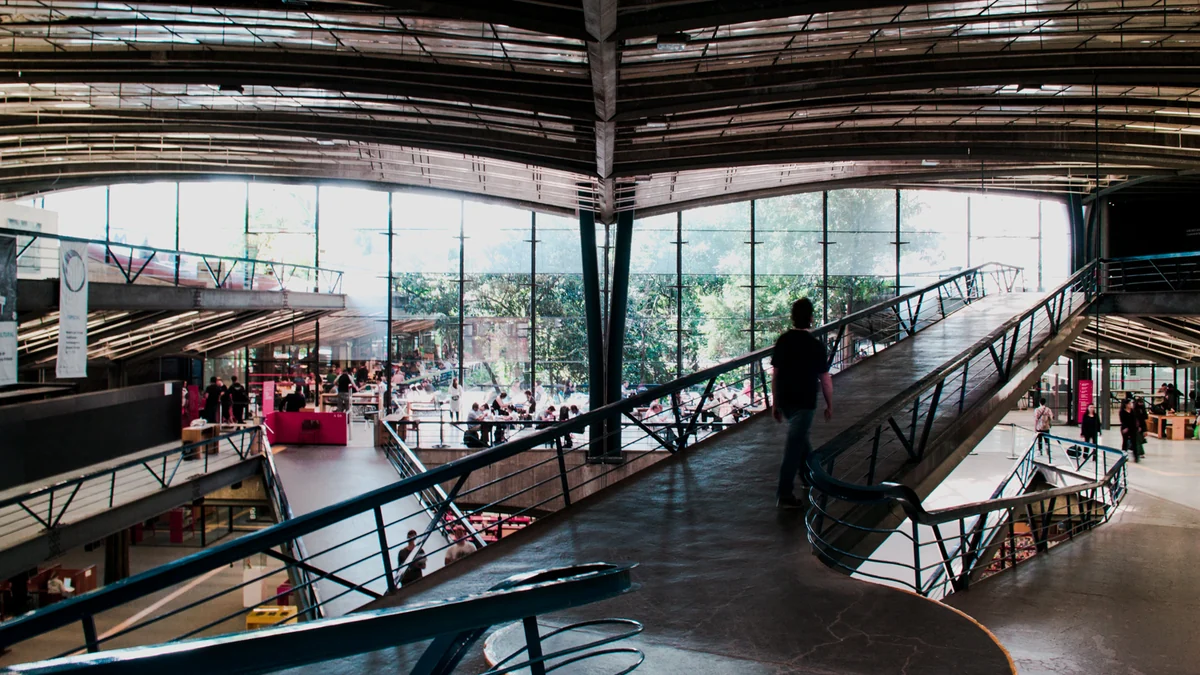
Sérgio Milliet and Alfredo Volpi: two focuses, one choice
For broad research, Biblioteca Sérgio Milliet is the most comprehensive destination. The municipal page on the CCSP libraries describes it as São Paulo’s second-largest public library, with a multidisciplinary collection of more than 110,000 titles.
Visitors researching art should identify Coleção de Artes Alfredo Volpi, a section of Sérgio Milliet formed with material from Biblioteca Mário de Andrade and the former IDART. One distinction matters: ordinary library consultation should not be confused with “Coleção de Arte da Cidade,” listed on the Visit page among collections requiring an appointment. Similar names may lead to different services, so confirm the correct department before leaving.
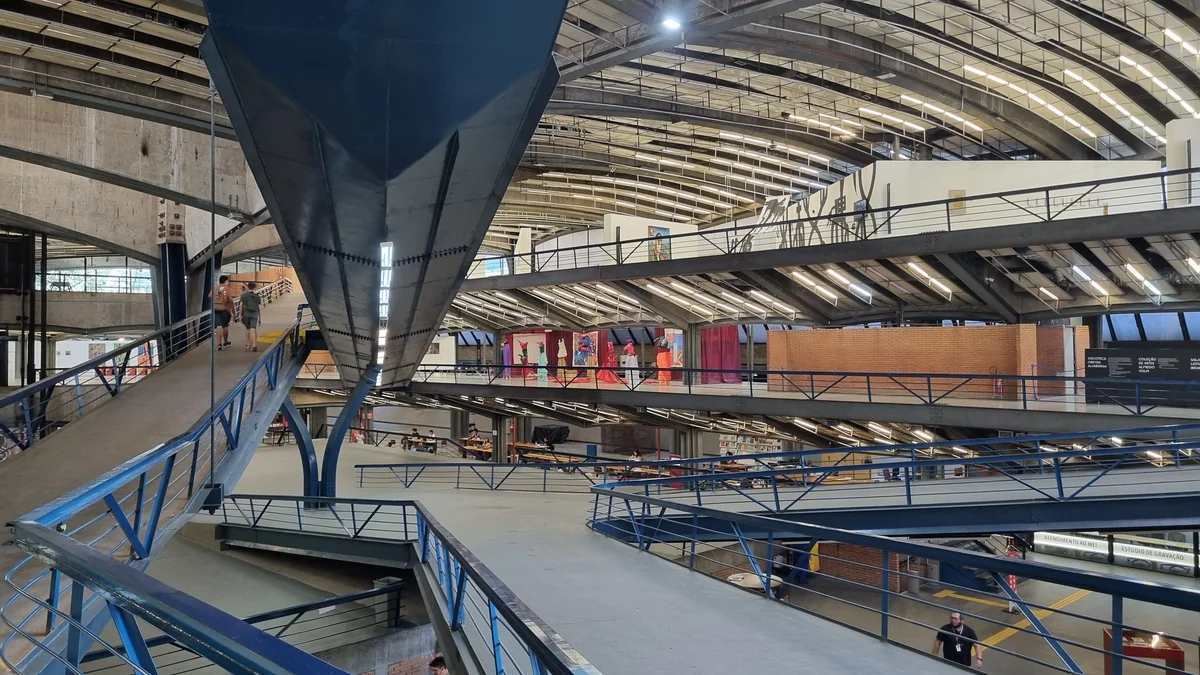
The comics and children’s rooms have distinct uses
Gibiteca Henfil holds more than 10,000 titles, including comics, comic books or fanzines, periodicals and books about the medium. Material can be read on site; borrowing requires membership. Sala de Leitura Infantojuvenil, meanwhile, is described as a social space for developing readers, with drawing and play areas in addition to books.
A 2025 municipal article illustrated how this setting can host contemporary popular culture: the vacation program included storytelling and a screening of the live-action *How to Train Your Dragon*. This provides cultural context, but it is not a current event announcement. For regular access to the room and Gibiteca, the same City Hall publication states that visitors must register at the cloakroom. Children are welcome when accompanied by a responsible adult.
Louis Braille: furniture is also access technology
Biblioteca Louis Braille was planned and equipped for people with visual impairments. Its reported collection comprises about 5,000 braille books and audiobooks, alongside computers and scanners with dedicated accessibility software. It also provides courses, an audiobook service and loans and returns through cecogram mail.
Its usefulness lies not simply in the position of a shelf but in the connection among equipment, reading formats and assistance. To use its services, City Hall advises contacting 11 3397-4088 or bibliotecabraille@prefeitura.sp.gov.br. The Visit page mentions registration at the foyer desk and hours that differ from other departments, including Sunday closure.
The record library: sit and listen, but do not bring a record
Discoteca Oneyda Alvarenga turns the seat and turntable into research tools. Located beside Biblioteca Sérgio Milliet, it provides vinyl listening as well as historical digital records, sheet music, specialist books and a music newspaper and magazine collection.
The turntables are reserved for duplicate records from the CCSP collection; visitors may not bring their own records. Admission ends one hour before closing to allow for playback time, and a municipal publication indicates registration at the cloakroom. An “open library” should therefore mean a public opportunity for consultation and shared use, not the absence of procedures.
Hours, address and a visit without assumptions
As checked on September 13, 2026, Sérgio Milliet, Alfredo Volpi, Sala Infantojuvenil, Gibiteca Henfil and the periodicals department were listed as open Tuesday through Friday from 10 a.m. to 8 p.m., and Saturday and Sunday from 10 a.m. to 6 p.m.; last admission was 30 minutes before closing. Louis Braille was listed Tuesday through Friday from 10 a.m. to 7 p.m. and Saturday from 10 a.m. to 6 p.m. The Discoteca was listed Tuesday through Friday from 10 a.m. to 8 p.m. and Saturday and Sunday from 10 a.m. to 6 p.m.
Holidays, appointments and department-specific rules modify parts of this schedule. Always check the official visitor information before going.
The CCSP is at Rua Vergueiro, 1000, Liberdade, São Paulo, postal code 01504-000, near Vergueiro station on the Metro’s Blue Line. On arrival, choose the activity first—study, comics, children’s reading, accessibility or listening—and then look for the corresponding furniture. It is a more accurate way to use the building without turning visual impressions into rules.
Continue your cultural route through the city
After exploring the CCSP collections, the route can continue at [Becoartes](https://becoartes.com/), Rua Gonçalo Afonso, 99, Vila Madalena, São Paulo.
Becoartes - Beco do Batman
99 Gonçalo Afonso Street, Vila Madalena, São Paulo
Sources and credits
- paulisson miura from Cuiabá, Brasil — CC BY 2.0
- paulisson miura from Cuiabá, Brasil — CC BY 2.0
- Mauro Cateb — CC BY-SA 4.0
- CCSP — Visite: horários, regras de convivência, bibliotecas e acervos
- Prefeitura de São Paulo — Bibliotecas do Centro Cultural São Paulo
- Prefeitura de São Paulo — serviços infantis, Discoteca Oneyda Alvarenga, Louis Braille e mediações do CCSP