Starting with the 2026 FIFA U-20 Women’s World Cup, every team in FIFA women’s competitions must have at least one woman as head coach or assistant coach, one woman on its medical staff and two women among the officials seated on the bench. The requirement covers FIFA women’s youth and senior tournaments for national teams and clubs. It should not be confused with the professional licensing rules announced by UEFA for its club competitions.
Who must be on the staff
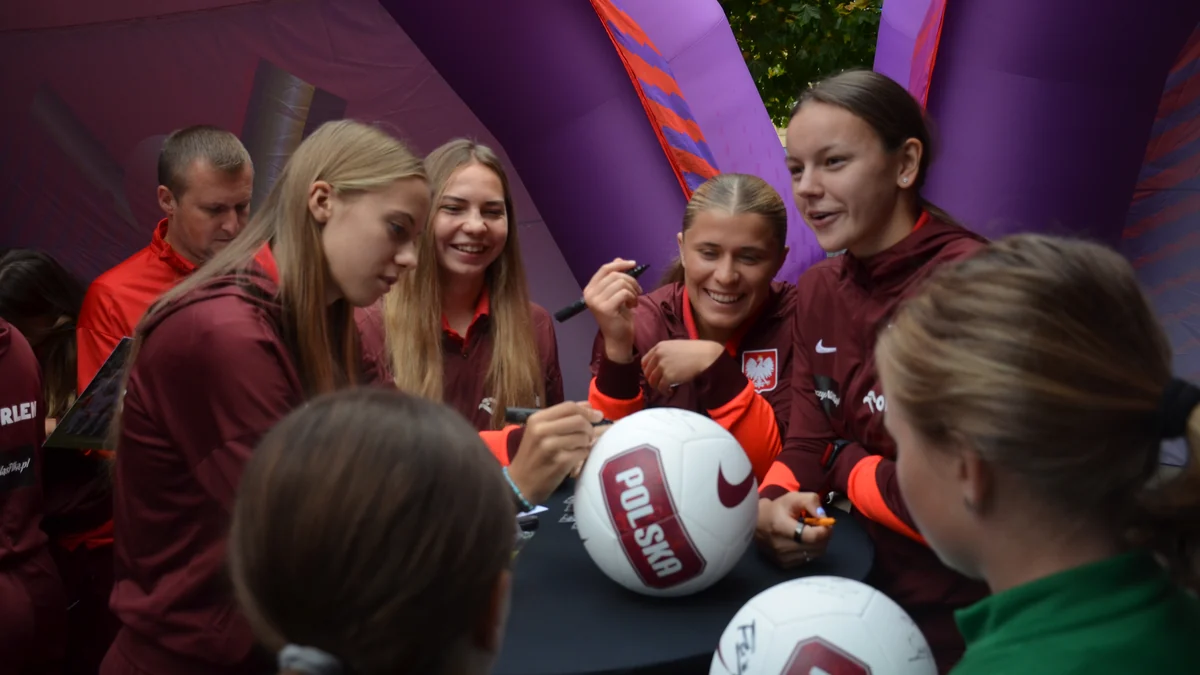
The rule approved by the FIFA Council on 19 March 2026 establishes three complementary requirements. The head coach or at least one assistant coach must be a woman; at least one member of the medical staff must be a woman; and at least two of the officials seated on the team bench must be women.
In practice, appointing one woman in any role is not enough to satisfy the entire rule. The coaching position, medical presence and minimum bench composition are separate criteria. A team led by a man, for example, may satisfy the first requirement with a female assistant, but it must still meet the other two.
According to the FIFA Council decision, the obligation covers all of the organisation’s women’s competitions: youth and senior levels, national teams and clubs.
Why the rule debuted in Poland
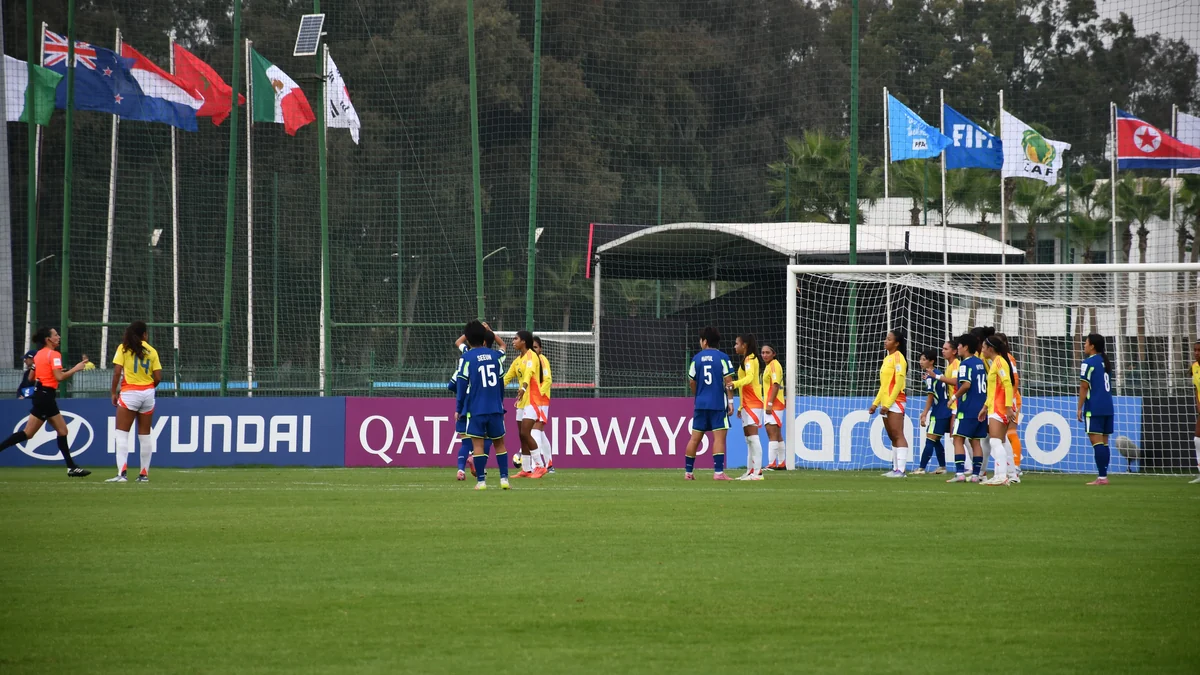
The U-20 Women’s World Cup in Poland, played in September 2026, was the first tournament to apply the rule. The competition features 24 teams, with 36 group-stage games and 52 matches overall across four host cities. FIFA also stated that the tournament uses VAR.
Its debut provides a practical way to understand the measure: it governs whom each delegation may register in coaching, medical and bench roles, not who officiates matches. Refereeing follows a separate process. FIFA appointed 68 match officials for the U-20 event: 18 referees, 36 assistant referees—all women—and 14 video match officials, ten women and four men, according to the FIFA refereeing announcement.
Which competitions come next
After the U-20 tournament, FIFA identified the U-17 Women’s World Cup and the Women’s Champions Cup, both in 2026, as the next competitions to apply the requirements. The rule will also reach the 2027 Women’s World Cup in Brazil. It is therefore not an experiment confined to a youth category: the announced framework extends to FIFA’s leading women’s national-team tournament.
The explanation published during the U-20 World Cup connects the rule with mentoring, education scholarships and the development of female coach educators. Participants in the mentoring programme include Patricia Aguilar, head coach of Costa Rica’s U-20 women’s team, and Camilla Orlando, head coach of Brazil’s U-20 women’s team.
Because regulations and calendars may be updated, teams and professionals should check each competition’s official documentation before registration and accreditation.
The rule does not reserve the head-coach position
The measure increases female representation without requiring every national team or club to appoint a woman as head coach. A team can comply through a female head coach or at least one female assistant. This distinction prevents two mistaken interpretations: that men have been barred from coaching women’s teams, or that the presence of any woman on the bench, regardless of her role, satisfies every requirement.
The broader context shows the scale of the decision. At the 2023 Women’s World Cup, women were the head coaches of 12 of the 32 teams. Since 2021, FIFA’s coach education scholarship programme has supported 795 female coaches from 73 member associations. The third edition of its elite-performance mentoring programme, launched in 2025, pairs 20 experienced professionals with developing female coaches.
FIFA and UEFA address different requirements
FIFA’s global rule sets female-representation requirements for teams entering its competitions. UEFA’s new framework, by contrast, focuses mainly on minimum coaching qualifications for clubs and broader access to professional education in Europe.
From the 2029/30 season, club head coaches in the UEFA Women’s Champions League and Women’s Europa Cup will need a Pro licence when the licensing body belongs to the UEFA Coaching Convention at Pro level; otherwise, an A licence will be accepted. For assistant coaches, the corresponding levels will be A and B.
UEFA will also allow Pro licence classes to expand from 20 to 24 candidates, reserving the four additional places for female coaches and people working in women’s football. Extra courses must reserve at least half of their places for that group, with women given priority. These measures appear in UEFA’s new coaching framework.
How to follow implementation
When assessing a team, separate three questions: is there a female head or assistant coach; is there a female medical professional; and are at least two female officials seated on the bench? When comparing FIFA and UEFA, the question changes: the former regulates representation in women’s competitions, while the latter also establishes licensing levels for specified European club tournaments.
Implementation can be observed throughout the 2026 tournaments and, on a larger scale, at the 2027 World Cup. Always confirm possible changes through the official FIFA and UEFA links.
Continue the conversation at Becoartes
After reading, Becoartes is a meeting place at Rua Gonçalo Afonso, 99, Vila Madalena. Check the [official website](https://becoartes.com/) before visiting.
Becoartes - Beco do Batman
99 Gonçalo Afonso Street, Vila Madalena, São Paulo
Sources and credits
- Marsilar — CC BY-SA 4.0
- Wikimedia Morocco — CC BY-SA 4.0
- Wikimedia Morocco — CC BY-SA 4.0
- FIFA — aplicação inédita da regra no Mundial Feminino Sub-20 da Polônia (16 set. 2026)
- FIFA Council — decisão, alcance e números dos programas de formação
- UEFA — novos requisitos de licenças e caminhos para treinadoras
- FIFA — arbitragem, VAR e composição do quadro de oficiais na Polônia