A rice bowl is an unusually good travelling companion in a gallery. You need no specialist vocabulary to imagine holding it. You can start with the rim, follow the pattern towards the base, then look up and compare it with a ceramic work that weighs about 200 kilograms. Both are part of Ceramics in Progress at Japan House São Paulo. On Sunday, November 29, at 11 a.m., visitors can explore the exhibition on a free, hour-long guided visit conducted in Portuguese with interpretation into Brazilian Sign Language, known as Libras. No advance booking is required for this tour.
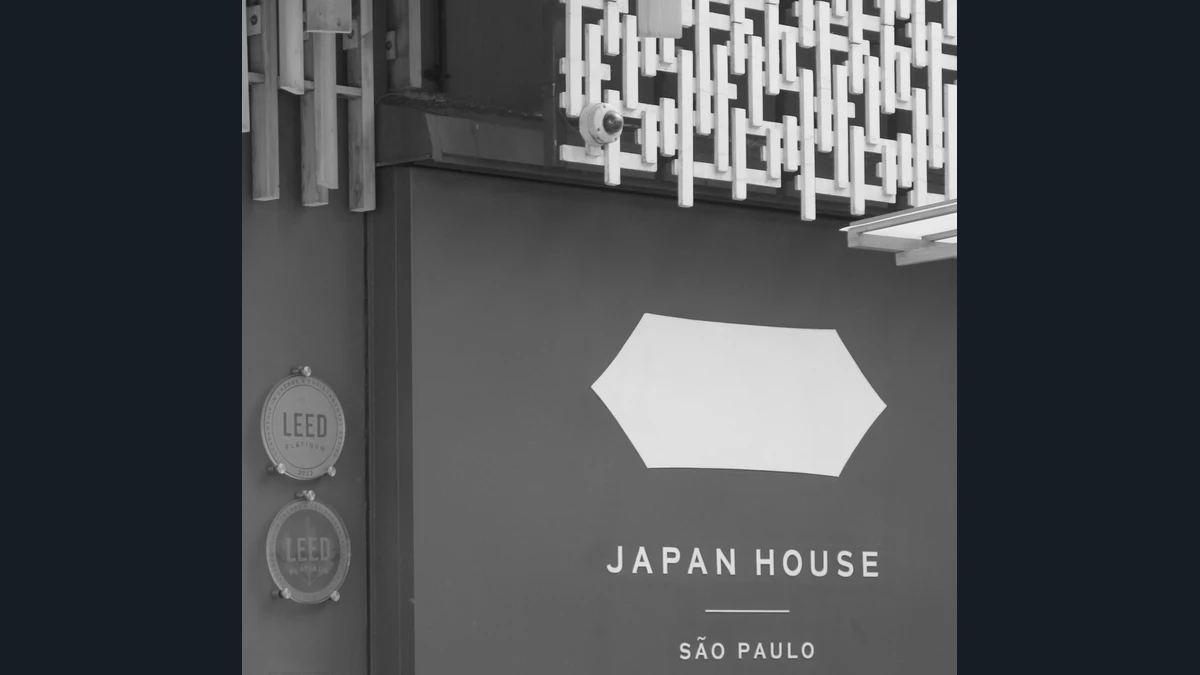
A map of pottery rather than a row of furnaces
The exhibition takes visitors to six places without asking them to leave Avenida Paulista. Bizen, Echizen, Seto, Shigaraki, Tamba and Tokoname are collectively known as Japan’s Six Ancient Kilns. The phrase can be misleading in English: these are not six individual pieces of firing equipment. They are pottery centres whose production traditions have continued since the twelfth century. The group received Japan Heritage recognition in 2017, a designation under a Japanese programme rather than a UNESCO listing.
Curators Natasha Barzaghi Geenen and Carolina De Angelis give visitors more than one point of entry into that long history. There is material from the Jōmon and Muromachi periods, as well as work by contemporary ceramicists. Rather than searching for a single national style, try asking what a potter in one of these places does differently from another. Some of the answers are visible in the clay itself. Others have to do with the purpose of the finished object: something made to be lifted to the lips makes a different demand on its maker from a sculpture meant to hold its own across a room.
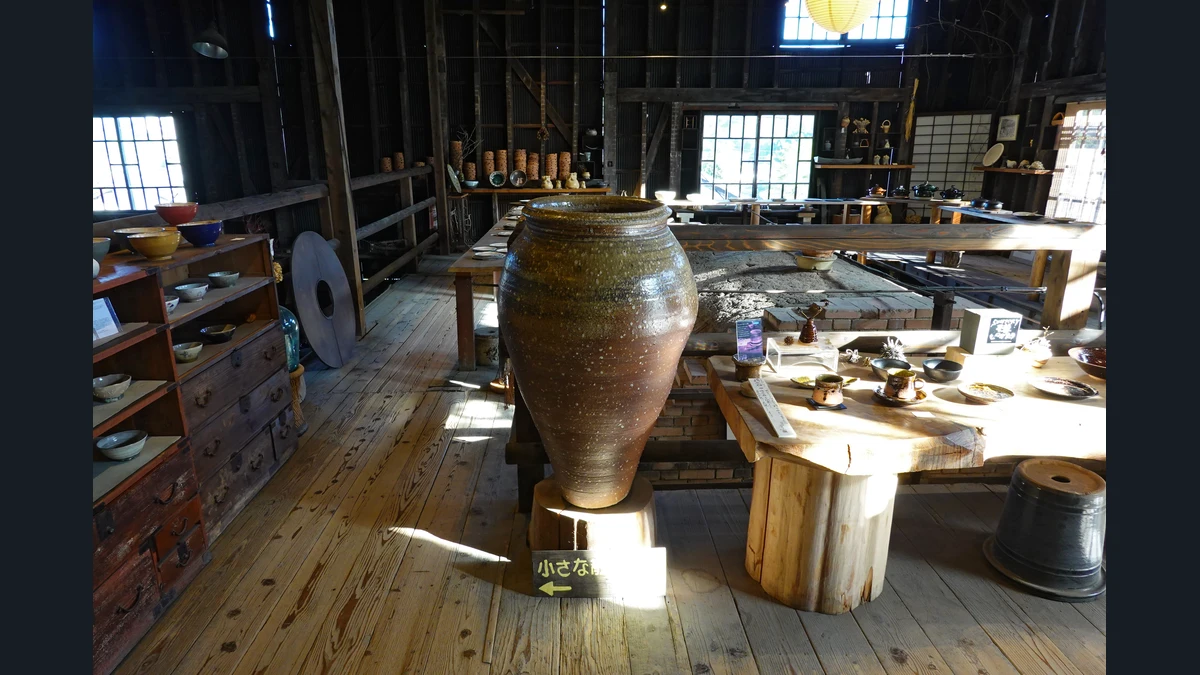
What happens between wet earth and a finished object
The clay samples are useful precisely because they have not yet become a showpiece. Differences in mineral composition give the makers different starting points. When you turn back to a finished vessel, a dark patch, a rough grain or a glint on the surface is no longer simply a question of decoration. The clay and the conditions of firing have a part in what you see. That does not mean every visible mark can be confidently diagnosed at a glance. Looking for the source of a detail can be more rewarding than guessing its name.
Two kiln designs give this part of the display a sense of space. An anagama has one sloping chamber. A noborigama has a succession of chambers rising along a slope. Picture the difference between one room and a flight of connected rooms: in either case the fire transforms the clay, but the structure in which it happens is different. It is a useful thought to carry into the next part of the gallery, especially when a surface catches the light differently as you move past it.
Two vessels can ask you to look at different speeds
Start small with the rice bowl by Yusuke Mizuno of Seto, decorated with a mugiwarade pattern. The fact that it has an everyday purpose does not make its design incidental. A pattern that continues around a curved wall cannot be taken in all at once from the front. Nearby in the exhibition’s selection, the spiral bowl by Bizen artist Kazuya Ishida provides another way to follow a line around a form. Compare that experience with the grey-glazed piece with linear motifs by Kenji Kasatsuji of Echizen.
Then change scale. Masamichi Yoshikawa of Tokoname is represented by Shizuku Zen/2000, weighing approximately 200 kilograms. A measurement that would be of no use in choosing a rice bowl suddenly becomes a helpful clue to the physical presence of the work. Going back to a small sake cup by Shusaku Ichino of Tamba after looking at something so large can be especially effective. There is no need to decide whether one is more impressive. The pleasure is in noticing how your own way of looking changes with the object.
Planning the Sunday visit, or coming back another day
The November programme lists the meeting on the second floor at Avenida Paulista, 52, in Bela Vista. Turn up at the scheduled time. Libras is Brazilian Sign Language; the announcement does not describe an English-language guided tour. For independent visitors, the exhibition offers resources including audio description, tactile objects and Braille material. The tactile resources are specifically provided for that purpose, not a general invitation to handle the pieces on display.
Sunday is the end of the A Caminho da Longevidade programme, not the end of the ceramics exhibition. A separate screening of director Anna Penteado’s documentary KI – O Valor da Vida starts at 3 p.m. and has its own registration arrangements. If what you want is a quieter return to the pottery, the exhibition runs until May 30, 2027. Regular opening hours are 10 a.m. to 6 p.m. Tuesday through Friday and 10 a.m. to 7 p.m. on weekends and holidays. Japan House is closed on Mondays; admission to the exhibition is free.
Image credits. Images resized, framed with margins and converted to WebP without cropping. Boaventuravinicius (CC BY 4.0); 663highland (CC BY-SA 4.0).
Sources for this story
Original documents are linked in the article.
Becoartes - Beco do Batman
99 Gonçalo Afonso Street, Vila Madalena, São Paulo