The 2026 World Cup final already had every element of a sporting event: a packed stadium, a worldwide broadcast, historic national teams and expectations built over weeks. But the moment that placed the match back inside the cultural debate came at halftime. For the first time, the tournament final received a musical show structured as a central spectacle, with Madonna, BTS, Justin Bieber, Shakira, Burna Boy, Coldplay, Gustavo Dudamel and appearances tied to the global pop imagination.
At the symbolic center of that operation stood Shakira. The Colombian artist returned to the World Cup stage not only as a recognizable star, but as someone who helped turn official tournament songs into popular language. Alongside Burna Boy, she performed "Dai Dai", the official song of the 2026 World Cup, released in support of the FIFA Global Citizen Education Fund. The gesture mattered less as an isolated number than as a synthesis: Latin pop, Afrobeats, football, philanthropy, live television and mega-event memory compressed into a few minutes.
The Confirmed Facts
FIFA recorded that the show took place on July 19, 2026, at New York New Jersey Stadium, during the final between Spain and Argentina. The organization described it as the first halftime show at a World Cup final. The halftime program brought together Madonna, BTS, Justin Bieber, Shakira and Burna Boy, as well as Coldplay, PS22 Chorus, characters from The Muppets and Sesame Street, with Chris Martin as curator.
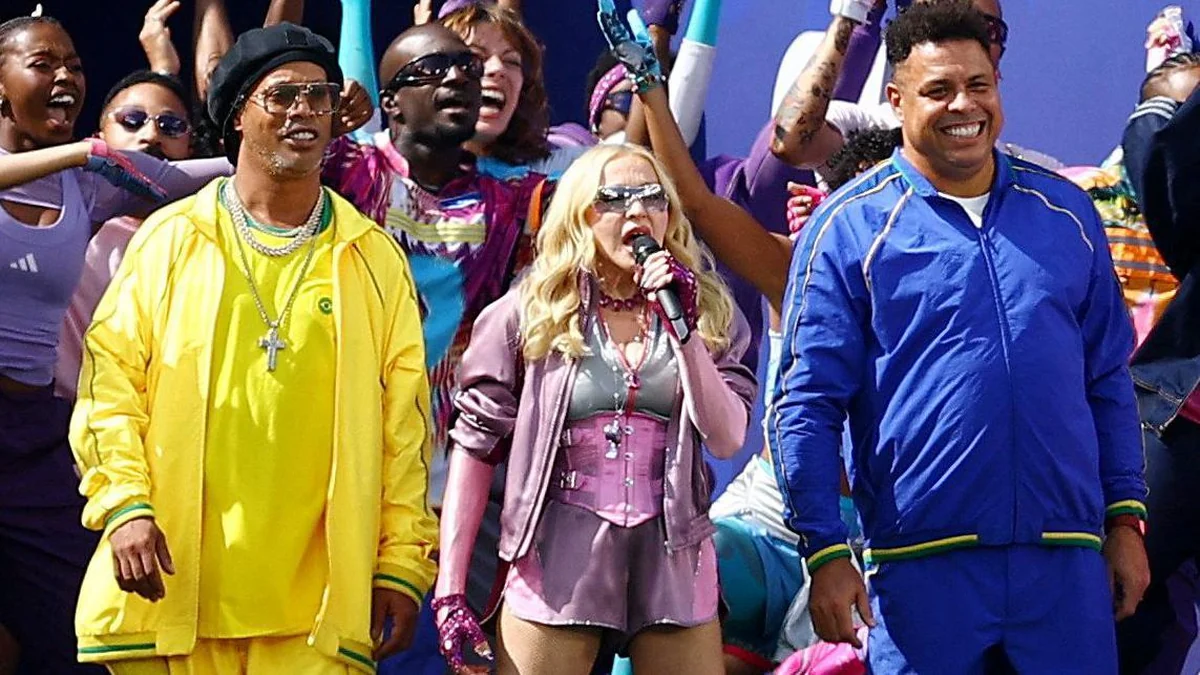
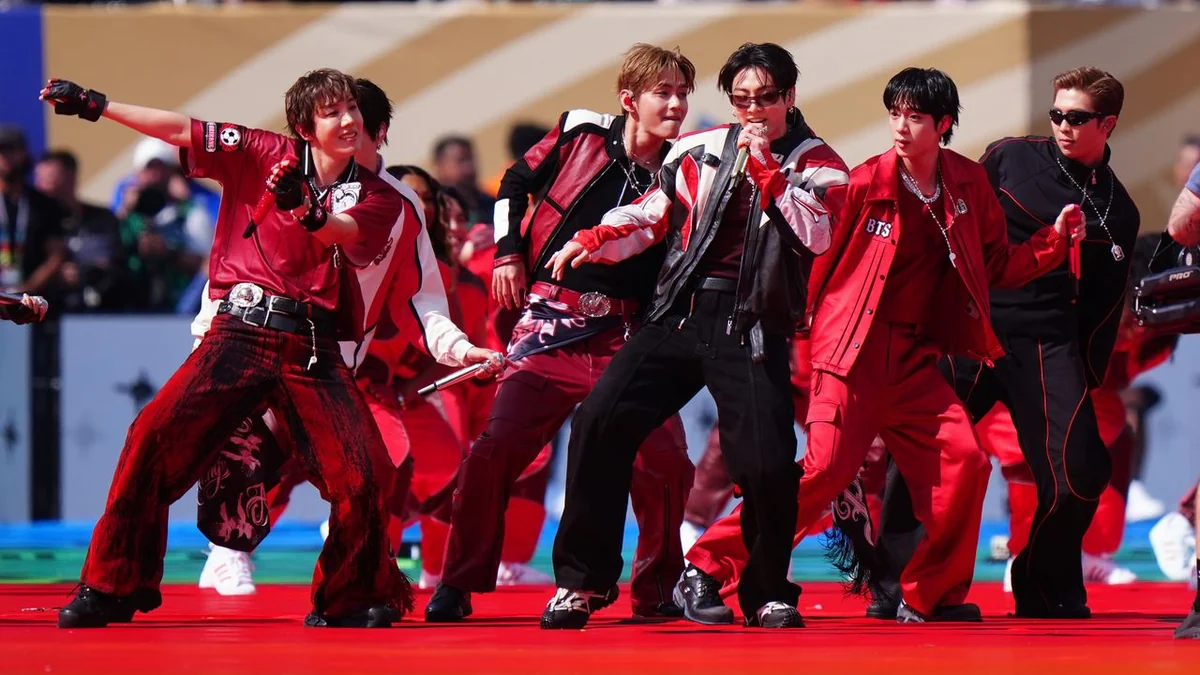
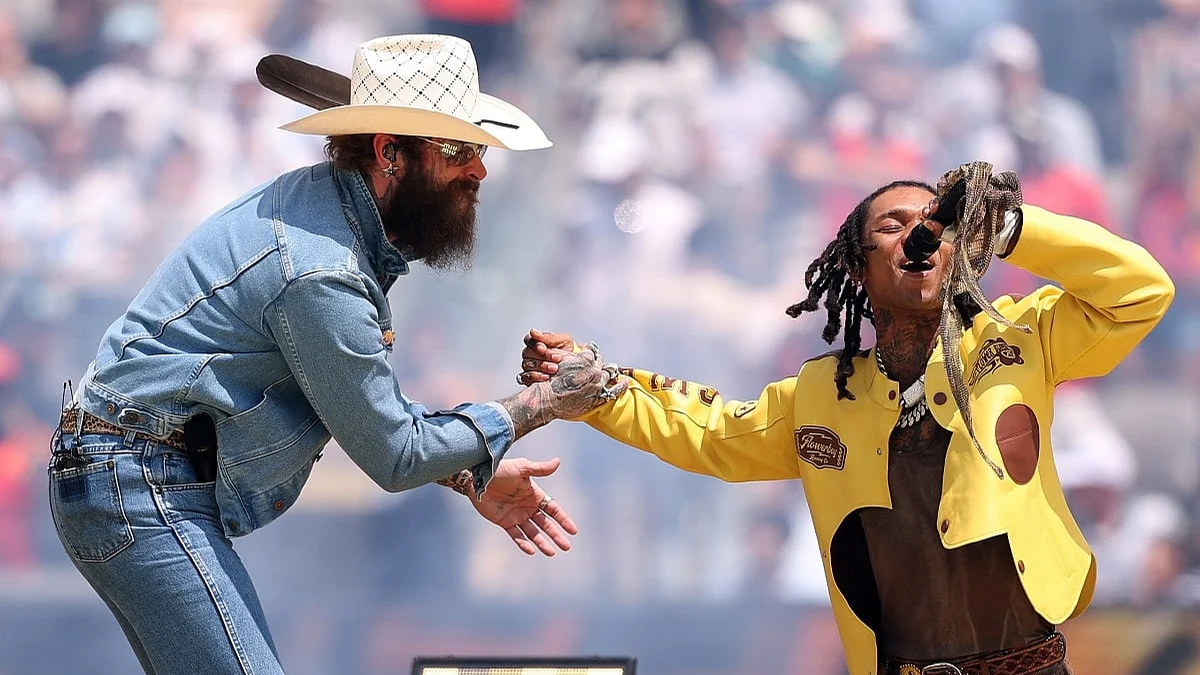
Before kickoff, the ceremony also featured IShowSpeed, Christopher Macchio, Post Malone with Swae Lee, Jennifer Hudson, Robbie Williams, Nicole Scherzinger and Laura Pausini. At halftime, Madonna opened the segment with "Music" and appeared alongside Ronaldo and Ronaldinho. BTS performed "Dynamite". Justin Bieber sang a special version of "Everything Hallelujah". Shakira and Burna Boy raised the temperature again with "Dai Dai". The finale brought together children from PS22 Chorus, Coldplay and children's characters for "We Dance".
Those are the facts. Interpretation begins when we look at what they organize: the World Cup explicitly incorporated an entertainment format that previously belonged more to the Super Bowl than to international football.
Shakira as World Cup Memory
Shakira did not arrive in 2026 as a random guest. Since "Waka Waka" in 2010, her relationship with the World Cup has become part of a generation's emotional memory. The artist understood early that a tournament song needs to work on three layers: a simple chorus, a body in motion and a feeling of community. The song does not need to explain football; it needs to create a collective gesture that outlives the calendar.
"Dai Dai" tried to update that formula. Burna Boy's presence shifted the sound toward a more Atlantic conversation, bringing Latin pop and Afrobeats closer instead of merely repeating the Euro-American mega-event playbook. FIFA stated that Shakira's royalties from the track would go to the education fund linked to the partnership with Global Citizen, and that Sony Music would match the first USD 250,000 raised. That does not automatically make the song sufficient social action, but it gives the release a verifiable public frame.
The cultural point is different: Shakira became a kind of bridge between the World Cup as televised celebration and the World Cup as pop archive. She carries the memory of previous editions, while also serving as a passcode for new audiences who consume music through clips, playlists, short videos and shared performances.
Halftime as a Battle of Language
Football has always had music. Supporters sing, the stands create refrains, the stadium has drums, boos, anthems and improvisation. What changed in 2026 was the institutional scale of the spectacle. When a World Cup final accepts a halftime show with sponsorship, global-star curation and a broadcast designed to circulate later across platforms, it assumes that the match also competes in the territory of cultural attention.
That may bother part of the audience. Some see halftime as the invasion of a North American language into a sport that already has its own rituals. The criticism is not empty. Football has a different dramaturgy: halftime is a technical pause, a dressing-room conversation, a collective anxiety. Turning it into a stage changes the event's breathing.
At the same time, the World Cup has always been more than ninety minutes. Ceremonies, mascots, official songs and national narratives have accompanied the tournament for decades. The 2026 show simply made more explicit an old tendency: major sports events are also cultural machines, capable of turning artists into symbols and symbols into global products.
The Meeting of Pop, Childhood and Social Purpose
The presence of Sesame Street and Muppets characters could have seemed out of place at a World Cup final. Within the proposal announced by FIFA and Global Citizen, it served a clear function: connecting the spectacle to the discourse of childhood education. The fund associated with the event had a public goal of raising USD 100 million to expand access to education and football opportunities for children.
Here it is necessary to separate intention, staging and impact. The declared intention was social. The staging was televised, family-oriented, calculated to reach audiences of different ages. The concrete impact depends on fundraising, governance, project execution and later transparency. A show does not solve educational inequality, but it can direct attention and resources toward an issue that, outside spectacle, rarely receives that reach.
The editorial question lies in balance. When music, brand, sport and philanthropy mix, the risk is that the cause becomes aesthetic. But there is also power when popular artists can drag to the center a conversation that would otherwise remain restricted to reports and conferences. The cultural value of the moment depends precisely on that tension.
Madonna, BTS and Bieber Expand the Map
If Shakira was the Latin and emotional link, Madonna represented the memory of mass pop culture. Opening with "Music" beside Ronaldo and Ronaldinho was an image designed to cross generations: a queen of pop surrounded by two Brazilian champions in a stadium selling football as a universal language.
BTS brought another kind of force: the performative discipline of K-pop and its hyperconnected global community. The choice of "Dynamite" reinforced the idea of an instantly recognizable hit, built to work even for viewers who do not follow the group closely. Justin Bieber, in a slower tone, offered contrast, even if that kind of break can divide reception.
The whole was not niche curation. It was an attempt to assemble an atlas of contemporary pop: Latin America, South Korea, North America, Africa, nostalgia, streaming, television and supporter culture. In eleven minutes, not everything can breathe. But the ambition was clear.
What This Says About Popular Culture in 2026
The 2026 final halftime show reveals an advanced stage of convergence culture. It is no longer enough for an event to be sporting, musical or social. It must generate scenes, clips, debates, memes, playlists, sponsorships, replays and identity readings. The match remains the competitive center, but the surrounding material fights for memory.
For artists like Shakira, that environment is familiar. Her career has always negotiated languages, markets and bodies: Spanish and English, pop and Latin rhythms, dance and personal narrative, stadium and music video. In 2026, that skill gained a perfect showcase. By sharing the official track with Burna Boy, she reinforced that global pop is not only an export from the United States; it is circulation among symbolic peripheries that have learned to occupy the mainstream.
That point matters especially to Brazil. The country understands better than most the mixture of football and music, yet its own popular production is often treated as local soundtrack, not as exportable language. The presence of Ronaldo and Ronaldinho alongside Madonna recalled the strength of the Brazilian imagination. The absence of Brazilian artists at the musical center of halftime also leaves a question for future World Cups and mega-events: who has the right to represent the global party when the world looks at the field?
Between Spectacle and Belonging
The performance does not need to be seen as a substitute for the stands. It works better as an added layer, with virtues and limits. Its virtue was assuming that popular music is a real part of sporting memory. Its limit was compressing cultural differences into a fast, heavily sponsored product dependent on strong images.
Shakira left that scene as a particularly interesting figure because she did not seem merely fitted into the format. She was already part of the World Cup's sonic history. "Dai Dai" may not have the same mythical fate as "Waka Waka", and only time will tell. But her presence with Burna Boy marked an attempt to update the tournament's sound for a world that is more hybrid, more African, more Latin, more connected and less tied to a single industry.
In the end, the World Cup halftime show showed that pop culture does not enter football through a side door. It is already inside: in chants, phone clips, outfits, dances, sponsorships, childhood memories and bar conversations. What 2026 did was illuminate that presence with stadium lights.
For Sao Paulo, a city that turns games into gatherings and music into street occupation, the episode speaks to an everyday sensibility. From Vila Madalena to Beco do Batman, culture is exactly this crossing of image, sound, body and circulation. Becoartes follows this kind of movement because it is where distant spectacle meets urban life up close.
Keep Reading Becoartes
Read more perspectives on music, cinema, urban culture and the encounters between global spectacle and cultural life in Sao Paulo.
Becoartes - Beco do Batman
99 Gonçalo Afonso Street, Vila Madalena, São Paulo
Sources and credits
- A Gazeta / BBC — Reprodução editorial com crédito à fonte
- Vogue India — Reprodução editorial com crédito à fonte
- Gulf News / AFP / Getty Images — Reprodução editorial com crédito à fonte
- FIFA - Best of the closing ceremony and Halftime Show | FIFA World Cup 2026
- FIFA - Copa do Mundo: Shakira e Burna Boy lançam Dai Dai, a música oficial
- FIFA - First-ever FIFA World Cup Topps Final Halftime Show provides a creative brand platform
- UOL Splash/Estadão Conteúdo - Veja como foi o show do intervalo da Copa do Mundo
- Billboard Brasil - Shakira, BTS, Madonna e Justin Bieber entregaram o esperado na Copa 2026?