Italy reached the semi-finals of the 2026 FIFA U-20 Women’s World Cup with a squad assembled from different competitive paths. It includes players attached to Serie A Women clubs, four registered with Serie B teams, two on loan abroad and a substantial core from the national side that reached the 2025 European Women’s U-19 Championship semi-finals. The result against South Korea shows how those paths met in Poland—without treating the second tier as a backward step.
The qualification that brings the map into focus
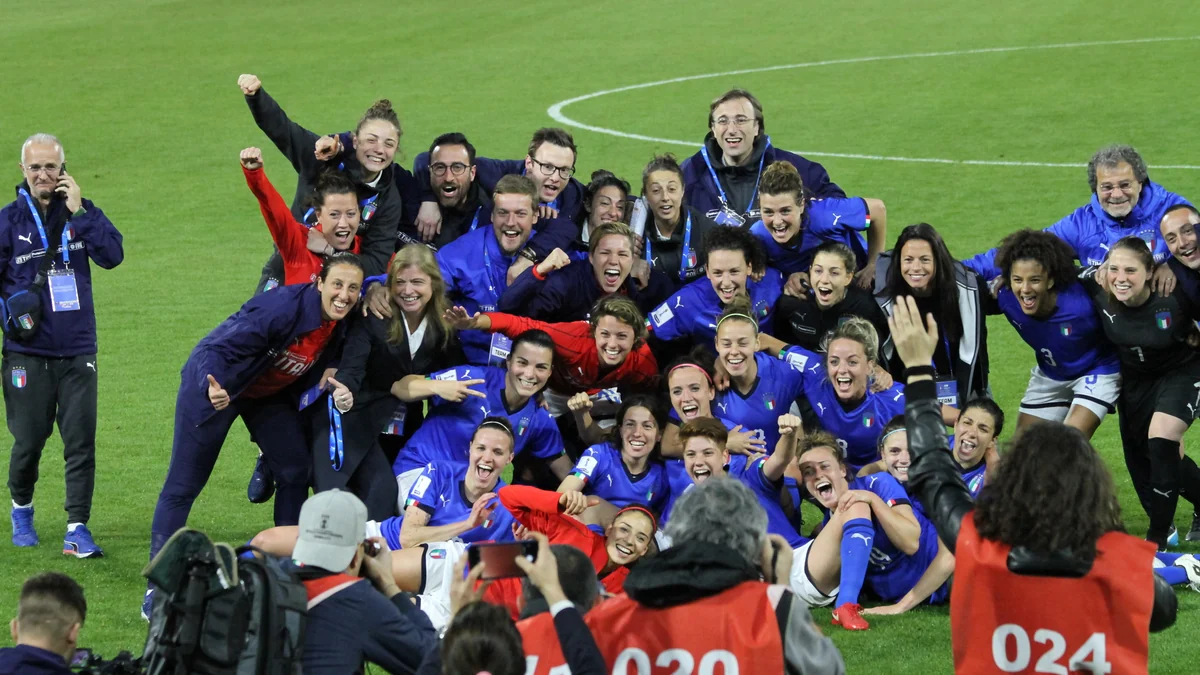
On 19 September, Italy beat South Korea 3–1 in the quarter-finals. Karen Appiah scored in the 16th minute and three minutes into the second half; Paola Fadda added Italy’s third with a long-range shot. Lee Haeun had equalised shortly before half-time. Appiah moved to four goals in the tournament and was selected by FIFA as player of the match, according to the FIGC’s official report.
The score matters, but the line-up tells a story too. The starters represented Inter, Aarau, Fiorentina, Sassuolo, Res Donna Roma, Cesena and Roma. Substitutions brought on players from Barcelona and Lazio, among other clubs. Nicola Matteucci’s team, therefore, did not emerge from one academy or a single division.
The semi-final also carries broader context because Italy had not played at the U-20 World Cup since 2012. The return came 14 years later, in a 24-team edition staged across four Polish cities. Qualification had been secured when Italy reached the semi-finals of the 2025 European Women’s U-19 Championship, also held in Poland, as detailed in the Italian federation’s report on the draw.
The U-19 generation provides continuity
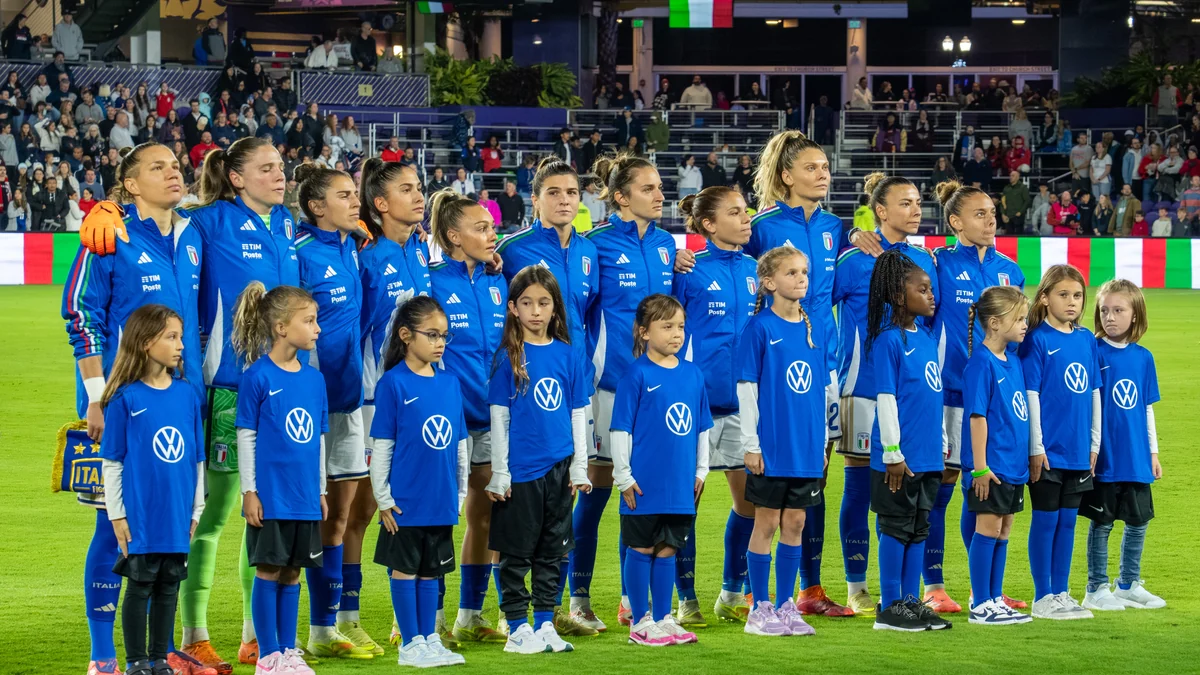
Several members of the 2026 squad had already taken part in the previous continental campaign. The FIGC identifies Giada Pellegrino Cimò, Manuela Sciabica, Emma Lombardi and Maya Cherubini among those who reached the European semi-finals. Lombardi and Cherubini had also gained Serie A Women experience with Fiorentina.
That continuity does not mean the squad remained unchanged. Gabriella Langella, attached to Napoli Women, is presented as one of the newer additions. Caterina Venturelli, Martina Bressan and Giulia Galli brought experience from another youth level: they had played at the U-17 World Cup in Morocco.
The picture reveals two complementary routes. Italy retained part of a generation that had already faced a decisive continental tournament while adding players with different club and international youth experiences. That is more accurate than crediting the campaign to a single domestic competition.
Serie A Women supplies most of the squad
Italy’s list contained 21 players. According to the distribution published before the tournament, 15 were associated with Serie A Women clubs: Elena Belli, Martina Bressan, Lidia Consolini, Emma Lombardi, Maya Cherubini, Manuela Sciabica, Lavinia Tornaghi, Gabriella Langella, Giada Pellegrino Cimò, Caterina Venturelli, Paola Fadda, Sofia Testa, Rosanna Ventriglia, Marta Zamboni and Giulia Galli—the latter officially joining Barcelona in early September.
Inter, Fiorentina and Sassuolo each supplied more than one Italian player. The group also drew from Milan, Lazio, Napoli Women, Roma, Ternana Women and Como Women. This spread shows that the national side’s foundation crosses several top-flight structures rather than relying on one club block.
The club-by-club distribution published by the FIGC also makes it possible to distinguish a player’s parent club from the division in which she was due to play. That distinction is central to understanding the loans.
Appiah shows why Serie B should not be overlooked
Four call-ups were due to compete in Serie B Femminile: Karen Appiah and Martina Tosello for Cesena, Giada Catena for Res Donna Roma and Erica Di Nallo for Vicenza. All four were on loan from top-tier clubs: Appiah from Milan, Tosello from Fiorentina, Catena from Roma and Di Nallo from Sassuolo.
Appiah’s case made this layer particularly visible. Listed as a Cesena forward at the World Cup, she started against South Korea, scored twice and ended the quarter-final with four tournament goals. That alone does not prove Serie B caused her performance, nor that every loan is necessarily developmental. It demonstrates a narrower point: a player loaned by a Serie A club and registered with a second-tier team held a decisive role in a World Cup knockout match.
Catena also started the quarter-final, as did full-back Tosello. Serie B was therefore not present only on paper: three of its four representatives began the match that took Italy into the semi-finals. When assessing youth development, competitive minutes and responsibilities can matter as much as the division’s label.
International routes complete the squad
Martina Cocino and Azzurra Gallo were on loan from Juventus to Aarau and Toulouse respectively. Giulia Galli, meanwhile, had officially become a Barcelona player. These cases extend the map beyond Italy’s two divisions and show that the squad brought together players in domestic and foreign settings.
The picture documented by the sources is varied: continuity from the U-19 side, a Serie A Women majority, four Serie B placements and links with clubs outside Italy. There is no evidence that every move followed a centralised plan. What can be observed is that different competitive paths converged in the same squad and made a concrete contribution to the campaign.
For future fixtures, kick-off times or possible changes, consult the competition’s and FIGC’s official channels. To continue the conversation about sport and culture in São Paulo, Becoartes is at Rua Gonçalo Afonso, 99, Vila Madalena; the address can be confirmed on its official website.
Sport and culture at Becoartes
Continue the conversation at Becoartes, Rua Gonçalo Afonso, 99, Vila Madalena. Confirm the address on the official website.
Becoartes - Beco do Batman
99 Gonçalo Afonso Street, Vila Madalena, São Paulo