Diverting Super Heavy to the sea did not end Starship Flight 15. It canceled the first of two planned catches. The Ship, or upper stage, continued in orbit, and SpaceX still had to assess its condition before authorizing the first attempt to catch it at the tower. The published estimate put a decision and possible return at about 9:15 p.m. GMT on November 14 — an operational time subject to change.
What happened to Super Heavy
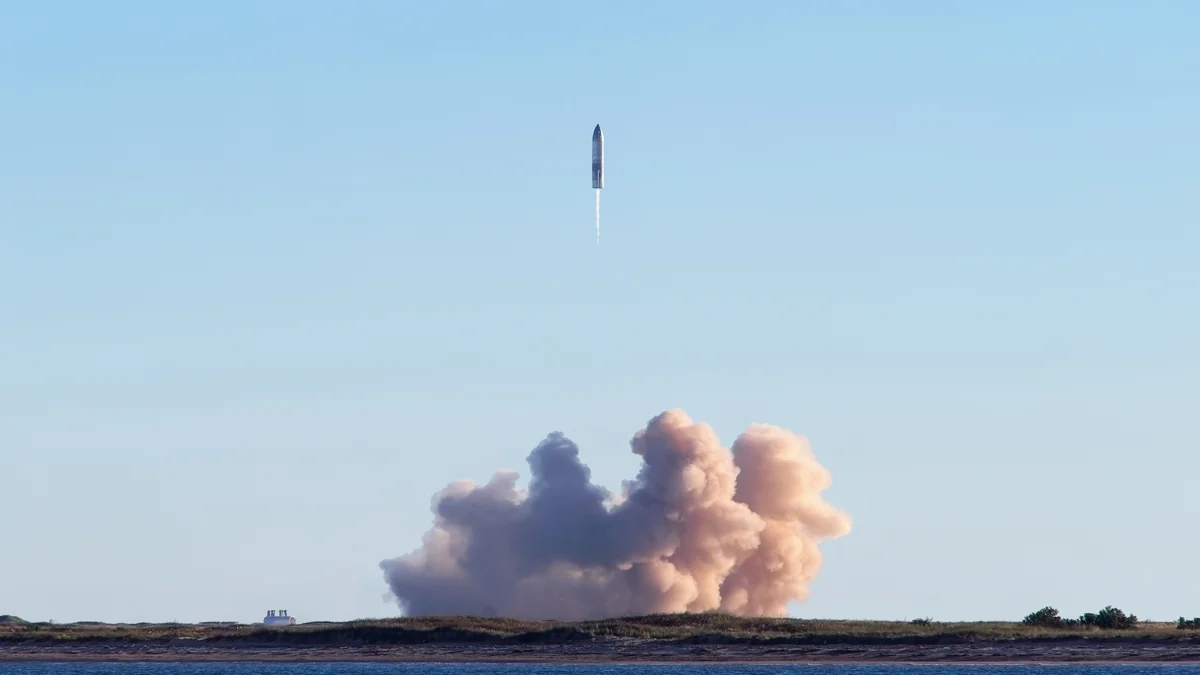
Starship lifted off from Starbase in Boca Chica, Texas, on Friday, November 13. The plan called for the two parts of the vehicle to be recovered separately: the Super Heavy booster first, followed by the Ship after an extended period in space.
The booster completed its job of propelling the Ship, separated and began its return. A little more than six minutes after liftoff, however, controllers directed it toward a Gulf splashdown instead of the launch tower’s mechanical arms. According to CBS News, a fireball enveloped it near the water.
The precise reason for the diversion had not been disclosed. CBS reported only that a problem prevented a safe catch and that the immediate cause of both the route change and the explosion before splashdown was unknown. The published information therefore does not support attributing the episode to a particular engine, sensor or component.
The mission continued with the Ship in orbit
The upper stage was not lost with the booster. It initially continued climbing on a trajectory that allowed for a safe ocean splashdown if a problem emerged. After an assessment period, one Raptor engine restarted for about ten seconds to place the Ship into its planned orbit, CBS reported.
The mission included deploying 26 Starlink satellites and completing about 14 Earth orbits. The BBC reported that a return to the tower area was expected 22 and a half hours after liftoff. This long orbital phase also gives controllers time to monitor the systems before accepting the added risk of reentry toward Starbase.
The interim status therefore has three separate parts: the Super Heavy catch was aborted; the Ship’s orbital activities continued; and catching the upper stage remained subject to authorization.
When the Ship catch could take place
The BBC’s published reference was 9:15 p.m. GMT on Saturday, November 14, 2026. This was an operational estimate, not a guarantee that the approach to the tower would occur at that exact minute.
Before an attempt, the team still had to complete a final check and confirm that the Ship, its trajectory and the ground infrastructure allowed a safe return. Because decisions can change during an experimental mission, readers should confirm the time and final plan on SpaceX’s official Flight 15 page.
The catch would be a first for the upper stage. SpaceX had caught Super Heavy on three previous test flights, but the tower arms had never caught a Starship after an orbital passage, according to the BBC.
How the return would work
If cleared, the Ship would perform a burn to lower its orbit and begin a reentry lasting about 56 minutes. Its four control flaps would adjust the flight path during descent. Near the base, three engines would ignite to flip the vehicle upright; thrust would then be progressively reduced so it could descend between the tower arms.
The sequence could continue only while safety parameters remained acceptable. CBS described options prepared for different stages: early or late splashdowns around Hawaii, an alternative several hundred kilometers off Chile, and a late-reentry diversion into the Gulf if either the Ship or tower developed an issue.
Controllers could also intentionally make the vehicle tumble so it would break up in the atmosphere before reaching land. These alternatives do not mean a problem had been detected; they are planned contingencies designed to prevent an unsafe approach.
What remains at stake in Flight 15
The goal of demonstrating full recovery of both stages on the same flight can no longer be achieved because Super Heavy ended in the sea. A successful Ship catch, however, would still test the part of the procedure never performed before: returning the upper stage to the launch area after an orbital stay.
Even without a catch, data from reentry, aerodynamic control and contingency decisions may remain relevant to the program. The result must nevertheless be described accurately: a planned splashdown or an early end to reentry would not equal a catch, even if it fulfilled safety criteria.
Until the final decision, the accurate description is that the Ship remained on its mission and a catch was possible, not confirmed. Aborting the booster’s return removed the chance of a double catch, but it did not automatically determine the upper stage’s fate.
Discover Becoartes
Visit [Becoartes](https://becoartes.com/) at Rua Gonçalo Afonso, 99, Vila Madalena, São Paulo.
Becoartes - Beco do Batman
99 Gonçalo Afonso Street, Vila Madalena, São Paulo